

London Halloween Walk
Why not risk a hair-raising hike around some of the City’s scary streets and historic haunts and raise money for your favourite charity!
Why not risk a hair-raising hike around some of the City’s scary streets and historic haunts and raise money for your favourite charity!

A small number of patients with Langerhans cell histiocytosis (LCH) may develop a difficult-to-treat condition called neurodegeneration, where their nerve cells slowly stop working and die. It typically affects the brain causing clumsy movements, unsteadiness and slurred speech.

Diagnosis is a scary time for families, full of unknowns. So how can we make diagnosis quicker and more accurate? Our researchers have some exciting ideas...
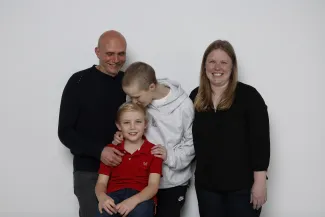
Vicky Robayna’s daughter, Liz, sadly died from a rare form of cancer aged 17. Vicky explains how, with the right support, there’s hope for families that their child can be comfortable during palliative care, allowing them to make memories and embrace life in the time they have.

The Child Cancer Smart bone tumour decision support tool provides guidance for healthcare professionals on the management of child or young person aged 0-18 years presenting with symptoms that may prompt the clinician to consider further investigation to diagnose or rule out a bone tumour.
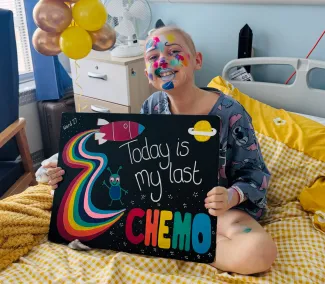
Amelia was diagnosed with acute myeloid leukaemia (AML), aged 11. Amelia’s mum, Gemma, shares her story.

Building capacity and quality in nurse training and education - global partnerships in children's cancer care
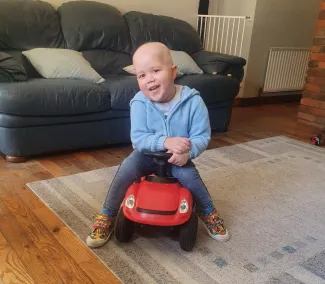
Sean was diagnosed with acute lymphoblastic leukaemia in August 2023, when he was just three years old. His mother, Siobhan, shares his story.
Living Labs are online spaces where young people with lived experience of cancer can work together with cancer researchers to help determine the future of research into cancer in children and young people.

Dr Shaarna Shanmugavadivel explains Child Cancer Smart, our new campaign aiming to improve childhood cancer diagnosis times.