

Can we improve how brain tumours are diagnosed?
Diagnosis is a scary time for families, full of unknowns. So how can we make diagnosis quicker and more accurate? Our researchers have some exciting ideas...
Diagnosis is a scary time for families, full of unknowns. So how can we make diagnosis quicker and more accurate? Our researchers have some exciting ideas...

Dr Shaarna Shanmugavadivel explains Child Cancer Smart, our new campaign aiming to improve childhood cancer diagnosis times.
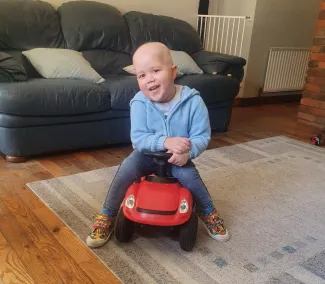
Sean was diagnosed with acute lymphoblastic leukaemia in August 2023, when he was just three years old. His mother, Siobhan, shares his story.
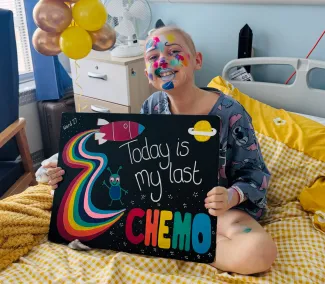
Amelia was diagnosed with acute myeloid leukaemia (AML), aged 11. Amelia’s mum, Gemma, shares her story.

A small number of patients with Langerhans cell histiocytosis (LCH) may develop a difficult-to-treat condition called neurodegeneration, where their nerve cells slowly stop working and die. It typically affects the brain causing clumsy movements, unsteadiness and slurred speech.
Professor Bob Phillips is the Candlelighters Chair of Supportive Care Research for Children and Young People with Cancer, University of York, Consultant Paediatric Oncologist at Leeds Children’s Hospital and CCLG member.
Jennifer Laidler, from the University of Birmingham’s Cancer Research UK Clinical Trials Unit, talks about what clinical trials are and why they are important.
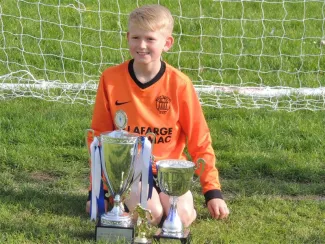
Sports shirts including those of legendary footballers Pele and Diego Maradona are being auctioned to raise funds for children’s brain tumour research.
Professor Mark Gaze, Dr Shermaine Pan, Dr Marinka Hol and Professor Marianne Aznar are part of the SMILE consortium, an international research group dedcated to minimising the long-term impact on the teeth and face in childhood cancer survivors. Here, they tell us about the group’s work.